
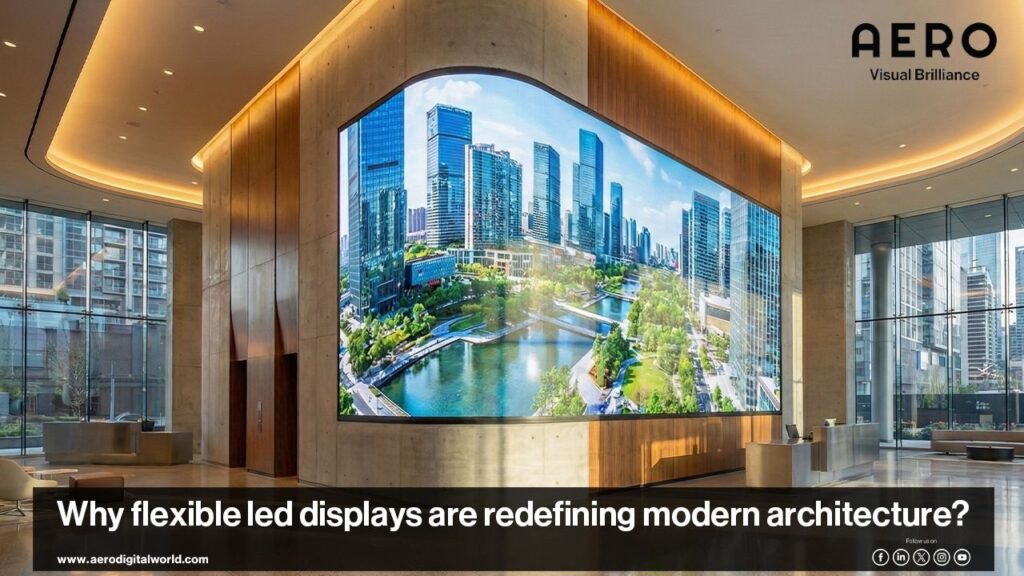
The architecture today has not just been stuck to structure; it’s evolved into the art of storytelling, decorated with all kinds of lights. These lights, laced with display technology, are turning static building structures and interiors into wide and bright canvases of motion, colour, and memory. Perhaps the most exciting innovations for many are the bendable, adaptable, high-impact screens that rewrite the rules on how buildings look and feel: flexible LED displays.
In this post, we will be learning why flexible LED displays are more demanding in how they keep aesthetics and technology together, enhance user experience, and offer unmatched design versatility. We will also highlight how you bring these possibilities into your next design or renovation project.
What Makes Flexible LED Displays Special?
Flexible LEDs are revolutionising what was previously merely a concept into a reality. With a twist and turn, these new screens bend, curve, and mould themselves to almost anything. Turning any mundane building into stunning digital canvases. Think of flexible LED displays as the Swiss Army Knife of digital architecture. Here’s what sets them apart:
Curved and Contoured Installation
These flexible LEDs have been an architectural blessing, with the ability to bend, twist, and wrap virtually around any surface. Be it columns, archways, curved ceilings, or even irregular architectural shapes, these LEDs can be fitted to the shape.
With this boon, architects can bring their boldest ideas to reality without being bound by the shape barrier. Whether it’s a dynamic lobby or an amazing outdoor view, these displays create smooth, immersive visuals that blend ideas and technology smoothly.
Seamless Architectural Integration
Unlike traditional cumbersome LED panels that appear “added on,” flexible LED films and mesh systems can blend flawlessly into all surfaces, like metal, glass, or concrete. They blend seamlessly into the architecture of the building without disturbing the original design aesthetic of the structure.
This integration transforms usual surfaces into living, breathing visual experiences. These LEDs become crucial elements in modern architecture, which respects both beauty and innovation.
Dynamic Visual Identity
A building powered by flexible LED displays can transform its appearance at will. During the day, you might catch just a gentle, ambient glow—nothing too showy. But once night falls? That’s when things get interesting.
The same surface can burst into vibrant branded displays or make bold architectural statements that completely transform the streetscape. That kind of flexibility means architects and brands can create spaces that change with the seasons, mark special occasions, or just set the right mood. The façade isn’t just there to protect the building anymore. It’s actually talking to the people walking past it.
Sustainability and Energy Efficiency
It’s not just about aesthetics with flexible LED panels. They actually perform well, too, contributing to sustainability. Unlike older technologies, flexible LED panels are more energy efficient. They are also lightweight, reducing overall structural requirements and material usage. This allows architects and developers to maintain creativity and design value while meeting green building targets.
Smart Cities Embracing Digital Innovation
With the growth and excitement of new technologies and new innovative business and signage designs, the need in urban environments for dynamic and flexible technologies for communications and visual engagements continues to grow. Cities in the 21st century are more frequently investing in developing urban and city branding and smart city technologies.
These cities are starting to understand that flexible smart technologies do not just offer a city a visual marketing and branding aesthetic but also a way to communicate urban challenges and provide solutions. Flexible LED displays have made a breakthrough in the marketplace. In urban transportation environments, e.g., bus and train stations, the flexible LED displays wrap around support pillars and hang from the ceilings to provide real-time text updates to passengers that are unobstructed from almost every angle.
Safe and clear updates, directions, and system information and instructions are scored on a flexible LED display and outline the walkway for systems that are advanced and complex for a passenger to navigate. Captured on scores that do not display on the text are real-time updates that provide a clear and automated messaging system for passengers.
The Technology Behind the Magic
What actually makes these displays revolutionary is their advanced construction. A flexible LED display module is a kind of LED screen panel designed with soft PCB boards, driver ICs, LEDs, resistors, capacitors, and magnetic screws. With this flexible base, the module can adapt—most remarkably—to meet high performance standards. The main technologies that have revolutionised the LEDs are:
- High Resolution: With ultra-high definition and 8K resolution, these new LEDs in 2025 have unmatched colour depth and clarity.
- Energy Efficiency: Traditional digital displays consume significant power, while modern LEDs operate on roughly 30–35% less energy—making them a smarter, more sustainable choice.
- Durability: These LED screens can run up to an estimated 100,000 hours. With premium LED chips, UV-resistant encapsulation, and heat-dissipating circuit design, the LEDs can be really durable.
- Weather Resistance: With IP65 waterproof protection and temperature protection from -30°C to 70°C, the outdoor models offer great weather resistance.
In Summary
Today, the architecture is not just limited to the concrete buildings anymore; it is more about creating experiences that last. Flexible LED displays give architects, designers, and brands something remarkable: the ability to make structures come alive. Façades, walls, and ceilings—they are no longer static. They can shift, respond, and speak.
For those of you at aerodigitalworld.com pushing the boundaries of design and digital integration, this isn’t just another tech trend. It is a fundamental move in how we think about our surroundings, buildings that breathe technology, with surfaces that tell stories, and spaces that adapt to the moment.
Want to explore what flexible LED displays could do for your next project? Drop a comment or get in touch—let’s figure it out together.